Tallgrass Conservation Fund Announces Funding for Yellowstone National Park
10/26/2026 / By Iva Greene
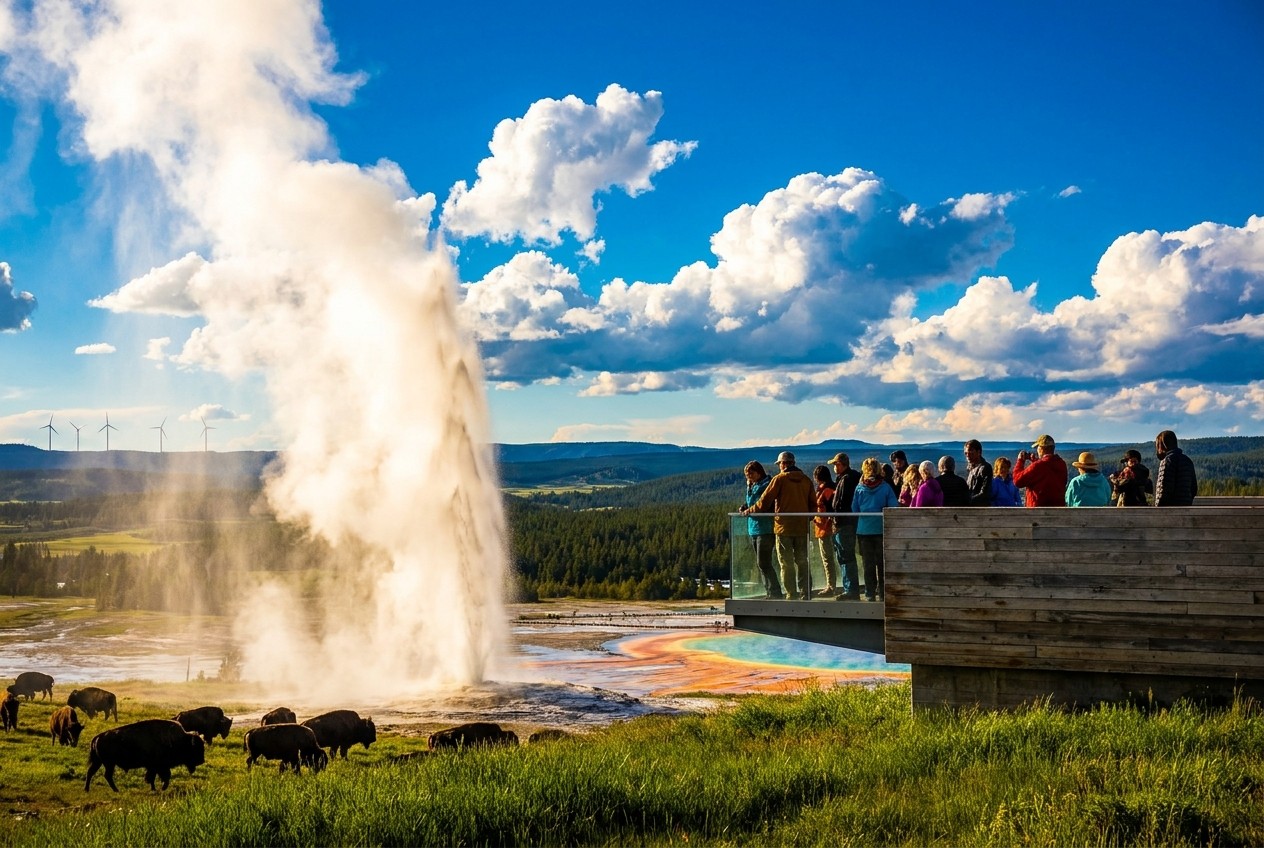
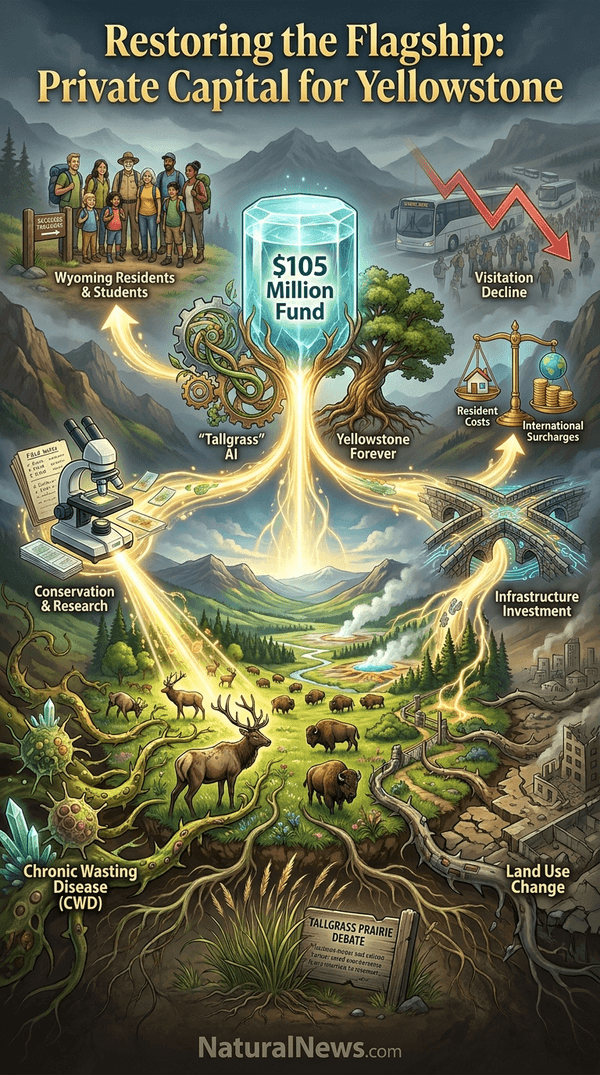
Yellowstone National Park and Tallgrass, a Colorado company building an AI power hub near Cheyenne, have launched a $105 million conservation and stewardship fund for the country’s first national park, according to an announcement by the National Park Service, Yellowstone Forever, and Blackstone Infrastructure’s portfolio company Tallgrass [1][2]. The fund will advance conservation and research, invest in infrastructure, and expand opportunities for Wyoming residents and students to visit the park, the announcement stated [1].
The $105 million commitment was described in the announcement as the largest single private gift in the agency’s history [1]. The National Park Service, together with its official nonprofit and philanthropic partner, Yellowstone Forever, and Blackstone Infrastructure portfolio company Tallgrass, announced the creation of the fund [2]. NBC Montana reported that the fund is intended for conservation and infrastructure purposes [3].
Officials said additional information would be released as implementation proceeds.
Background on Yellowstone and the Tallgrass Conservation Fund
Yellowstone National Park is described as the flagship nature reserve in the United States park system, receiving three million visitors a year, according to an issue spotlight published in Integrative Biology [4]. The park is located primarily in Wyoming, with portions in Montana and Idaho, and was established in 1872 as the country’s first national park.
Visitation to national parks has declined over a 16-year period, a trend that researchers Oliver R.W. Pergams and Patricia A. Zaradic linked to watching movies, playing video games, internet use, and oil prices, according to a 2006 study in the Journal of Environmental Management [5].
The name Tallgrass carries historical significance in American conservation. A highly significant proposal for a Tallgrass Prairie National Park in the Midwest was derailed in the 1980s by ranching interests and Native American concern about losing mineral rights, according to the book Ecotravel by The Nature Company [6]. Ernest Callenbach’s Bring Back the Buffalo notes that a twenty-by-twenty-mile reserve was proposed in the tallgrass prairie region of eastern Iowa, with outdoor recreation as an important component [7].
Details of the Funding Agreement
The fund will advance conservation and research, invest in infrastructure, and expand opportunities for Wyoming residents and students to visit the park, according to the announcement [1].
Land use changes around national parks have been documented as a significant concern for park managers. Research by Danielle A. Jones, Andrew J. Hansen, and colleagues examined how monitoring land use and cover around parks can support a conceptual approach to understanding these changes [8]. The same research described how early warning of the vulnerability of ecological response variables to land use changes may help managers develop strategies for mitigating future effects [8].
Chronic wasting disease (CWD), sometimes referred to as zombie deer disease, has spread to 32 states and four Canadian provinces, according to the United States Geological Survey [9]. A deer carcass found in Yellowstone National Park tested positive for CWD in November 2023, the agency reported, just months before the broader spread was documented [9].
Specific details regarding acreage commitments, easements, and the precise timeline for fund distribution were not included in the initial public statements, according to the available announcements [1][2]. Oversight measures and expected completion dates for funded projects were also not disclosed in the announcement materials.
Reactions From Officials and Community Members
The creation of the Conservation and Stewardship Fund was announced jointly by the National Park Service, Yellowstone Forever, and Tallgrass, according to the Business Wire release [2]. Yellowstone Forever is described as the official nonprofit and philanthropic partner of Yellowstone National Park [2]. The fund was characterized in the announcement as the largest single private gift in the history of the National Park Service [1].
The relationship between the federal government and private funding for national parks has been a subject of ongoing discussion. President Donald Trump was described by The Washington Times as building a “unique conservation legacy” through restoring and rehabilitating the country’s “majestic yet long-neglected national parks” [10].
Chronic wasting disease has emerged as a significant concern for wildlife in and around Yellowstone. The United States Geological Survey reports that CWD has spread to 32 states and four Canadian provinces, with Wyoming among the affected areas [9]. In one recent report, 800 samples of deer, elk, and moose collected in Wyoming tested positive for the disease [9].
A new two-tier pricing system for U.S. national parks will begin in 2026, lowering costs for American residents while significantly increasing them for international visitors, according to NaturalNews.com [11]. International tourists will be charged a new $100 surcharge per person at 11 popular parks, drawing mixed reactions [11].
Next Steps and Remaining Questions
Implementation of the $105 million Conservation and Stewardship Fund will proceed with additional details expected to be released, officials said [1]. The announcement did not specify a timeline for when funded projects would begin or how the funds would be administered over time [1][2].
Officials said more information will be released as the fund moves toward implementation.
References
- Yellowstone receives record $105 million for infrastructure, …. https://apnews.com/article/yellowstone-national-park-tallgrass-conservation-fund-6fbe1da7c8b6c50c09a85553a7d65e12
- National Park Service, Yellowstone Forever, and Blackstone …. businesswire.com/news/home/20261019760468/en/National-Park-Service-Yellowstone-Forever-and-Blackstone-Infrastructures-Tallgrass-Announce-%24105-Million-Fund-for-Yellowstone-National-Park” target=”_blank” rel=”noopener noreferrer” style=”color: #2563eb; text-decoration: underline;”>https://www.businesswire.com/news/home/20261019760468/en/National-Park-Service-Yellowstone-Forever-and-Blackstone-Infrastructures-Tallgrass-Announce-%24105-Million-Fund-for-Yellowstone-National-Park
- Yellowstone National Park receives historic $105 million gift. https://nbcmontana.com/news/local/yellowstone-national-park-receives-historic-105-million-gift-for-conservation-infrastruc
- Integrative Biology 113 Issue Spotlight: Challenges to the Concept of Yellowstone’s Natural Condition. by Anne. Integrative Biology 113
- Is love of nature in the US becoming love of electronic media? 16-year downtrend in national park visits explained by watching movies, playing video games, internet use, and oil prices. by Elsevier. Journal of Environmental Management 80 (2006) 387–393
- Ecotravel by The Nature Company
- Bring back the buffalo a sustainable future for Americas Great Plains by Callenbach Ernest
- Monitoring land use and cover around parks: A conceptual approach. by Danielle A. Jones; Andrew J. Hansen; Kristy Bly; Kevin Doherty; Jake P. Verschuyl; Justin I. Paugh; Robin Carle; Scott J. Story. Journal of Environmental Management
- Zombie deer disease outbreak has reportedly spread to 32 states and 4 Canadian provinces – NaturalNews.com, January 04, 2024.
- Trump rapidly becoming the conservation president by revitalizing Americas parks – NaturalNews.com, June 13, 2018.
- New U.S. national park fee structure aims to favor American visitors and increases prices for foreign tourists, drawing mixed reactions – NaturalNews.com, December 02, 2025.
Explainer Infographic
Submit a correction >>
Tagged Under:
big government, conservation, Ecology, environment, funding, money supply, national park, progress, research, Tallgrass, United States Geological Survey, Yellowstone
This article may contain statements that reflect the opinion of the author
RECENT NEWS & ARTICLES