Asian Water Tower’s Hidden Crisis: Groundwater Losing 24 Billion Tonnes Annually
08/22/2026 / By Chase Codewell
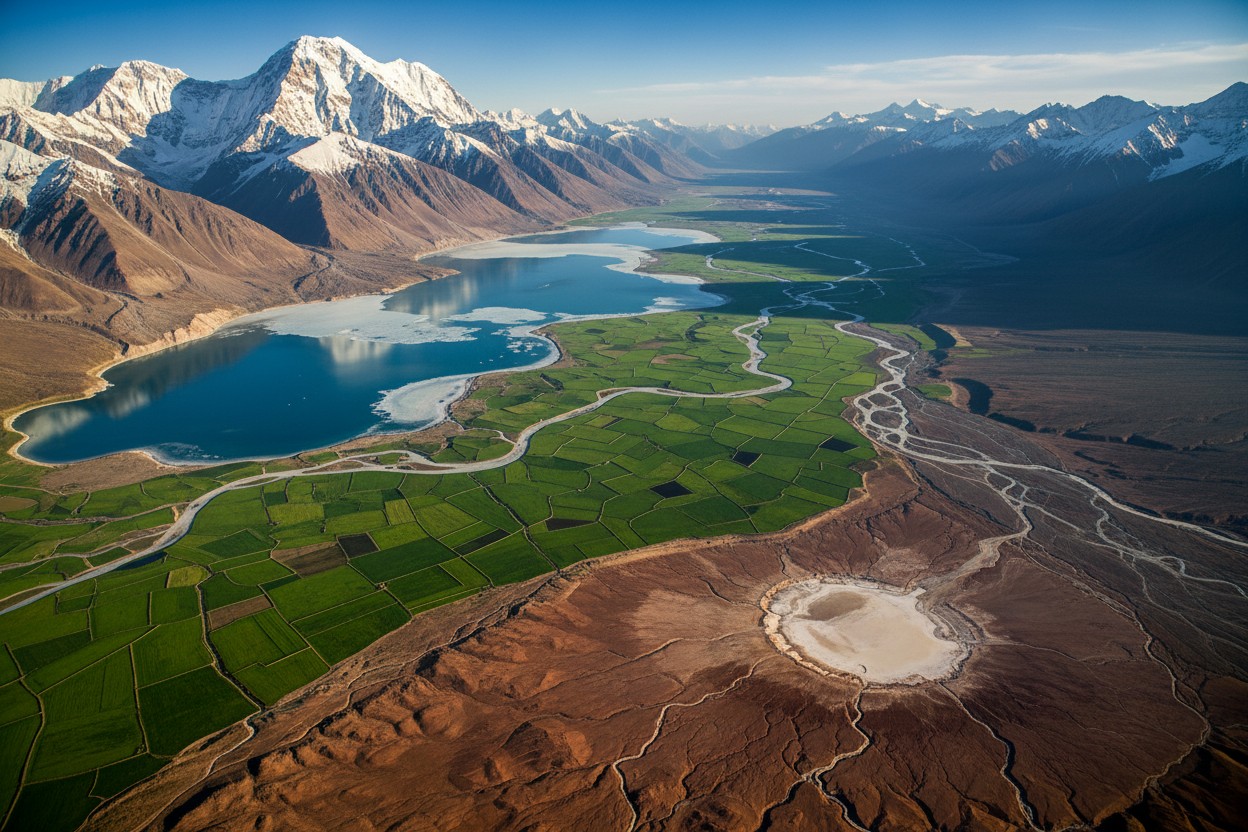
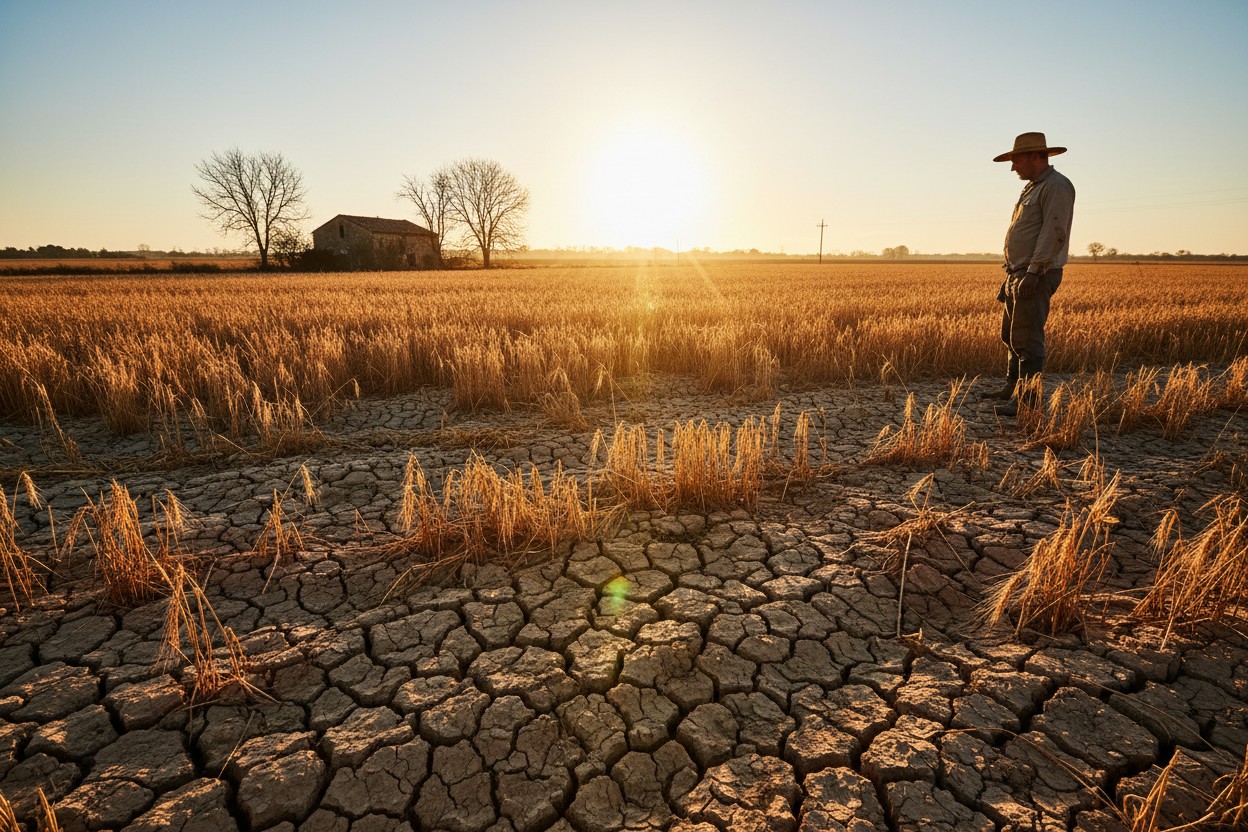
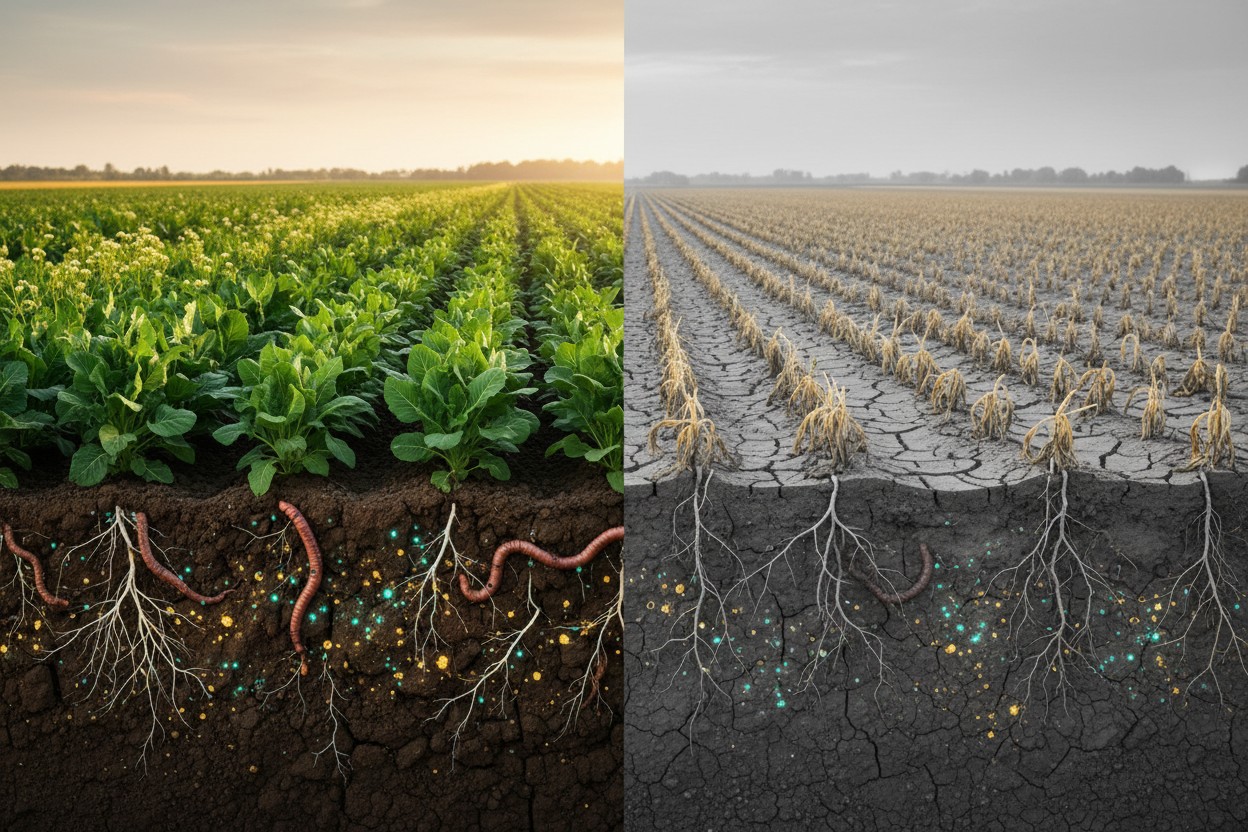
Groundwater reserves beneath High Mountain Asia, a region often called the “Asian Water Tower,” are declining by about 24.2 billion metric tons per year, according to a study published Aug. 20 in Environmental Research Letters. The research, led by Prof. Shudong Wang of the Aerospace Information Research Institute of the Chinese Academy of Sciences, used satellite observations and an artificial intelligence-powered model to reconstruct roughly 20 years of groundwater storage changes from 2003 to 2020.
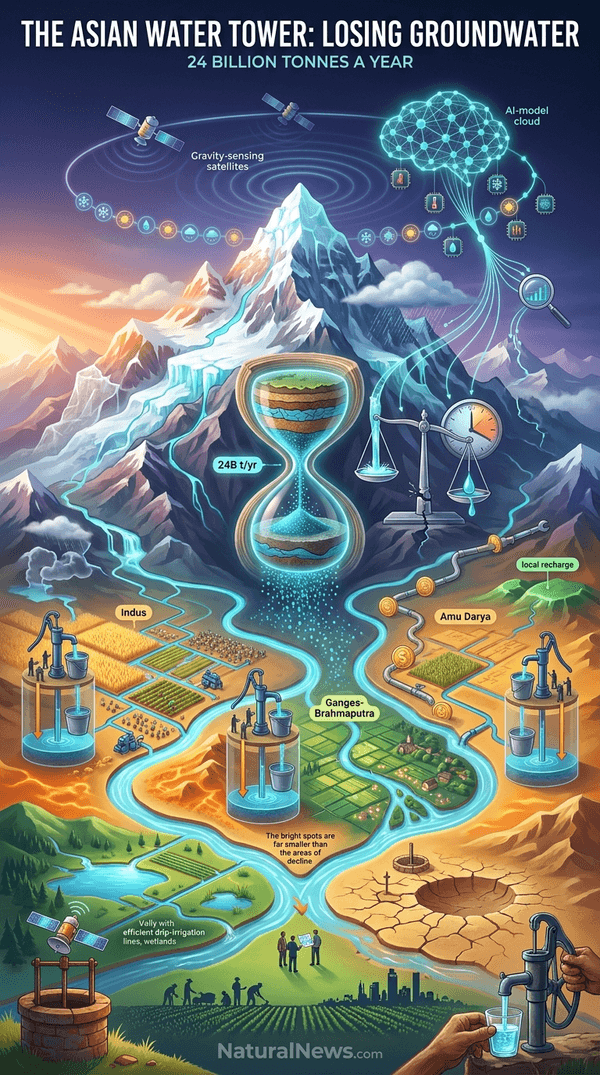
The region provides water that supports farming, cities, and ecosystems across more than a dozen downstream countries, making it a critical resource for hundreds of millions of people, according to the study. About two-thirds of High Mountain Asia experienced declines in groundwater storage during the study period, the researchers reported. The largest losses occurred in heavily populated downstream basins where irrigation demands are high, including the Ganges-Brahmaputra, Indus, and Amu Darya basins. Some inland areas at higher elevations recorded localized increases in groundwater storage, the study stated. Groundwater overdraft in arid and semi-arid regions is a well-documented concern in the water resource literature [1].
Study methodology and data
To build a clearer picture of what is happening underground, the research team created an AI-powered assessment model that combines observations from multiple satellite sensors, Earth system modeling, and explainable machine learning, according to the study. The team sought to overcome two major obstacles to understanding groundwater in the region: limited on-the-ground data and the extremely complex mountainous landscape, the study stated. The framework incorporates a lightweight Transformer architecture designed to account for hydrological memory and delayed effects within mountainous catchments, according to the researchers.
Using this approach, the team reconstructed about 20 years of groundwater storage changes across High Mountain Asia, the study said. The system also helped identify the main forces driving those changes and allowed researchers to explore how groundwater risks could develop under future scenarios, according to the study.
To test the reliability of the results, the researchers compared their findings with thousands of measurements from groundwater wells as well as independent datasets, the study reported. Those comparisons provided additional support for the study’s conclusions. The framework was designed to help address long-standing difficulties in studying the region, including rugged terrain and incomplete information about human water use, according to the research team.
Drivers: Climate and human water use
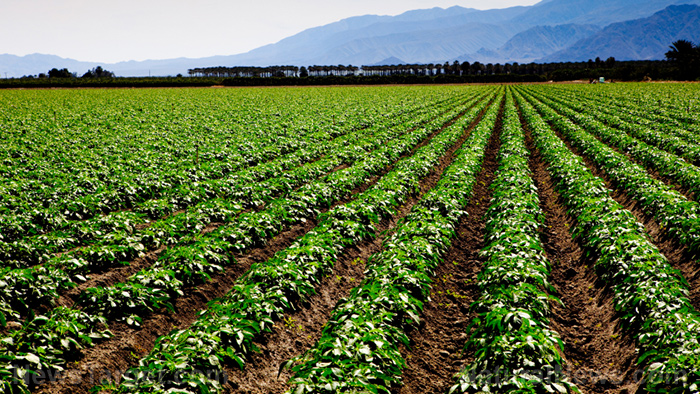
Climate-related forces explain nearly half of the observed variation in groundwater storage, according to the study, with changes involving the cryosphere playing an especially important role. Human withdrawals have become an increasingly significant source of depletion, particularly in downstream agricultural regions that rely heavily on irrigation, and this influence became more pronounced after 2010, the researchers said.
Irrigation expansion has historically depended on government support in many developing regions. As David Malin Roodman writes in ‘The Natural Wealth of Nations,’ during the Green Revolution era, ‘pesticides, fertilizer, and water were practically given away, through favorable tariffs, subsidized loans, and government-funded irrigation projects’ [2].
The researchers reported that some inland areas at higher elevations experienced localized increases in groundwater storage during the study period, even as most of the region recorded declines.
Projected risks and the glacier melt buffer effect
The study projects that groundwater losses will continue if current water-use patterns remain unchanged. In some locations, increased glacier melt could temporarily reduce the pace of groundwater decline around the 2060s, according to the researchers. The team said this ‘buffer effect’ cannot continue indefinitely and is expected to be followed by faster losses.
If present patterns of water use do not change, groundwater depletion could accelerate further, increasing the threat to agricultural areas downstream that depend on these reserves, the study stated. Depletion of major aquifers has also been reported outside Asia. In a May 2026 interview on BrightVideos.com, Mike Adams noted that ‘key aquifers — such as the Ogallala Aquifer in parts of Texas and the Central Valley Aquifer in California — are critically low’ [3].
Context and significance
High Mountain Asia supplies water that supports farming, cities, and ecosystems across more than a dozen downstream countries, according to the research team. Hundreds of millions of people depend on the region’s water resources, the study noted. Globally, about one-fifth of the population lives in areas where water is scarce [4].
The research team said limited on-the-ground data and the region’s complex mountainous landscape have historically made groundwater assessment difficult. The study stated that its framework, which combines remote sensing observations, established hydrological knowledge, and interpretable AI methods, helps address those obstacles. The research was funded by the National Key R&D Program of China and the Key Program of the National Natural Science Foundation of China, according to the study. The paper, ‘Assessing groundwater sustainability across high mountain Asia using remote sensing,’ by Kai Liu, Xueke Li, Yong Bo, Shudong Wang, and Guangsheng Zhou, was published in Environmental Research Letters.
In water-stressed agricultural regions, crops that can survive with little water are considered a practical adaptation. Moringa, for example, ‘can survive with very little water’ and is described as particularly appealing for people in water-limited conditions, according to a gardening guide from Mercola.com [5].
References
- Water Encyclopedia Ground Water. – Jay Lehr.
- The natural wealth of nations. – David Malin Roodman.
- Bright Videos News – Interview with David Dubyne transcript. – BrightVideos.com. Mike Adams – BrightVideos.com. May 26, 2026.
- This bowl shaped funnel helps to naturally cool homes harvest rainwater. – NaturalNews.com. NaturalNews.com. February 24, 2017.
- How to Grow Moringa. – Mercola.com. Mercola.com. December 22, 2017.
Explainer Infographic
Submit a correction >>
Tagged Under:
AI, Asian Water Tower, Climate, depletion, Ecology, environ, groundwater, High Mountain Asia, human water use, hydrological memory, irrigation, research, Transformer, water conservation, water storage, water supply
This article may contain statements that reflect the opinion of the author
RECENT NEWS & ARTICLES