Study: Organic Land Management Enhances Soil Enzyme Activity, Reduces Reliance on Petrochemical Fertilizers
08/16/2026 / By Iva Greene
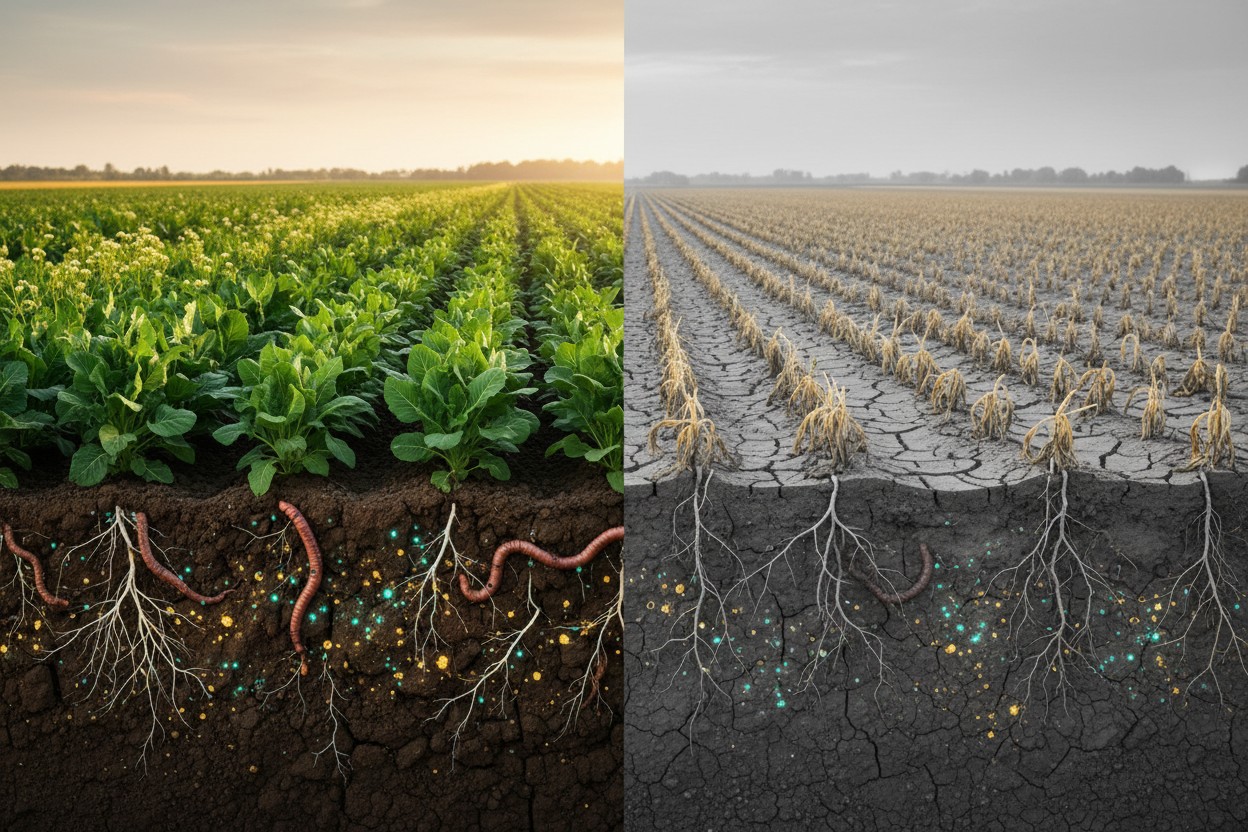
A study published in Agriculture, Ecosystems & Environment found that organic land management enhances the activity of soil enzymes, particularly on sandy soils known for poor water and nutrient retention.
Researchers collected soil samples from 74 conventional and organic sites in the Netherlands, all verified under the Dutch organic certification system, and assessed eight hydrolytic enzymes involved in carbon, nitrogen, phosphorus and sulfur cycling. Organic certification prohibits the use of synthetic petrochemical fertilizers and pesticides, with a three-year transition period that restores soil microbial health and nutrient cycling, the study stated.
Reporting from NaturalNews.com has described organic farms as more sustainable and beneficial to communities than conventional operations [1]. Another study, published in the Archives of Agronomy and Soil Science, found that organically treating soil improved its biochemical quality and made it more sustainable in the long run [2].
Methodology and Study Design
Researchers gathered soil samples from sandy and marine clay soils under conventional and organic systems in early summer 2017. According to the study, the sampling design allowed researchers “to test for management and time impacts” while accounting for air temperature, precipitation and humidity. The 74 sites were selected based on soil type, crop type, and whether the fields had undergone rotation and/or plowing regimes.
Enzyme activity was assessed in both air-dried and revitalized soils. The authors wrote that the revitalized method was used “to enable comparisons of soil enzyme activities on a standardized basis by ensuring the same soil moisture content and temperature conditions.” Microorganisms are widely recognized as sensitive soil quality indicators and respond to organic matter addition and management practices, according to “Bioremediation Science” [3].
Key Findings on Enzyme Activity
Carbon-cycling enzymes were generally higher under organic fields, with a stronger effect in sandy soils mainly attributed to ?-glucosidase, an enzyme that supports soil fertility and microbial life, according to the study. Phosphomonoesterase, an indicator of productive phosphorus cycling, increased under organically managed cereal fields on sandy soils.
The same effect was not identified for arylsulfatase in the sulfur cycle. According to “Sustainable Agriculture Reviews 3,” only one study related to sulfur transformation has been reported in organically managed soil [4].
The divergence between organic and conventional fields widened over time for enzymes in all cycles, the authors found. They noted that shifts in fungal community composition may have been a confounding variable, stating: “This finding suggests… that our time axis may partly be confounded with other variables that were unaccounted for.”
Earlier research reported positive correlations between hydrolase activities such as ?-glucosidase and phosphatase and vegetal diversity [5]. Other work found that compost application caused a significant increase in microbial activity as measured by dehydrogenase activity [6].
Transition Period and Broader Impacts
When converting from a chemical-intensive operation, certification of organic farms prohibits synthetic petrochemical fertilizers and pesticides for three years, a transition period that restores soil microbial health and nutrient cycling, the study stated. The researchers pointed to post-harvest leftover plant material as feed for soil enzymes, while cautioning that enzyme activity is not the sole indicator of total soil microbiome activity.
Organic systems hold benefits for the entire food value chain, including farmworkers, children and people with preexisting health conditions exacerbated by pesticide exposure, according to the report. Organic farms also hire more workers per acre and employ a greater proportion of full-time employees, according to a 2020 report [7]. Conventional farming practices, by contrast, have been linked to soil depletion through nitrogen-based fertilizers, tilling and monoculture [8].
Related Research and Conclusion
Earlier research published in the Soil Science Society of America Journal by Kansas State University researchers found that organic amendments such as manure and compost facilitate microbial diversity in no-till systems, according to the report. A Cornell University study in Agricultural Systems underlined the role of soil-dwelling organisms. Study coauthor Ashley Jernigan said, “Really, we need to be optimizing these biotic processes in our soil and focusing more on biotic measurements.”
A 40-year Rodale Institute investigation, cited in reporting by Children’s Health Defense, found organic systems achieve three to six times the profit of conventional production and 40% higher yields during stressful drought periods [9]. A separate study of diversified farming operations worldwide found farms can achieve social and environmental benefits by working “less like factories” and “more like healthy natural ecosystems” [10]. Together, the findings indicate that organic land management can preserve soil function while reducing dependence on petrochemical fertilizers, according to the report.
References
- NaturalNews.com. “Here’s all you need to know to get started with organic farming”. NaturalNews.com. January 02, 2021.
- NaturalNews.com. “Another reason to grow organic: Plants grow healthier and have a higher nutritional value”. NaturalNews.com. September 26, 2018.
- Amitava Rakshit. “Bioremediation Science”.
- “Sustainable Agriculture Reviews 3”.
- Journal of Environmental Management. “The Effects of Human Trampling on the Microbiological Properties of Soil and Vegetation in Mediterranean Mountain Areas”. 2010.
- Soil Biology and Biochemistry. “Soil bacterial functional diversity as influenced by organic amendment application”.
- NaturalNews.com. “Organic farms also a boon for the community, says new report”. NaturalNews.com. September 23, 2020.
- Dr. Mercola. “Farmers Increase Profits Using Traditional Practices”. Mercola.com. September 06, 2017.
- Children’s Health Defense. “Organic Farming Produces Better Yields During Droughts, Higher Profits for Farmers, 40-Year Report Shows”.
- Children’s Health Defense. “‘Drop Monoculture and Industrial Thinking’: Study Shows Diversified Farming Pays Off for People and Planet”.
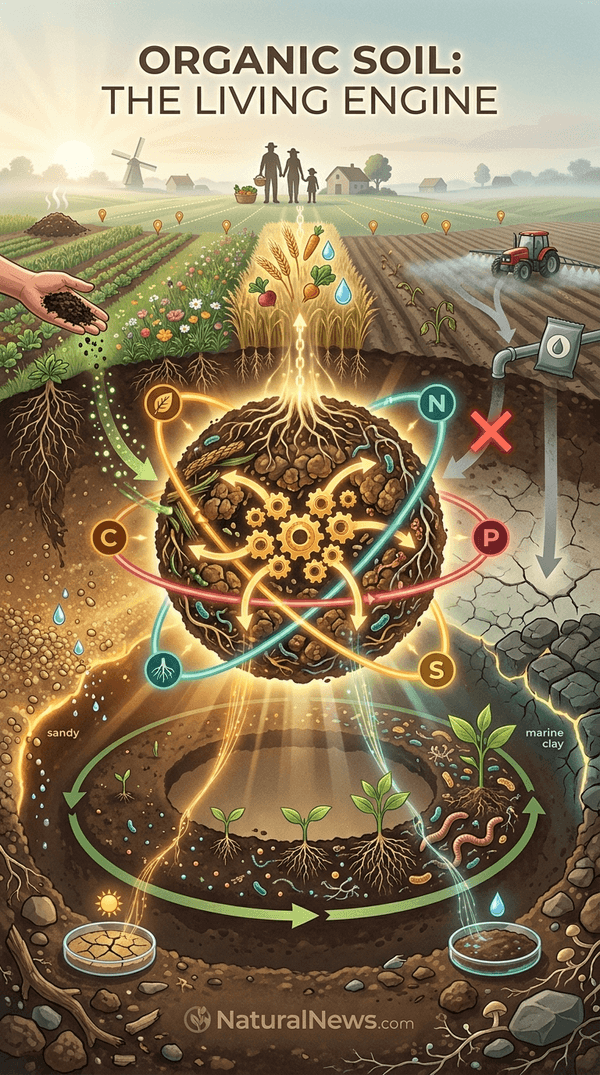
Explainer Infographic
Submit a correction >>
Tagged Under:
agriculture, Censored Science, crops, Ecology, environ, Fertilizers, harvest, land management, nutrient cycling, nutrients, organic certification, organic farming, organics, research, scientific, soil enzymes, soil microbes, soil nutrients, sustainable farming
This article may contain statements that reflect the opinion of the author
RECENT NEWS & ARTICLES